FILM ADVANTAGES
Performance, weight, and supply reliability
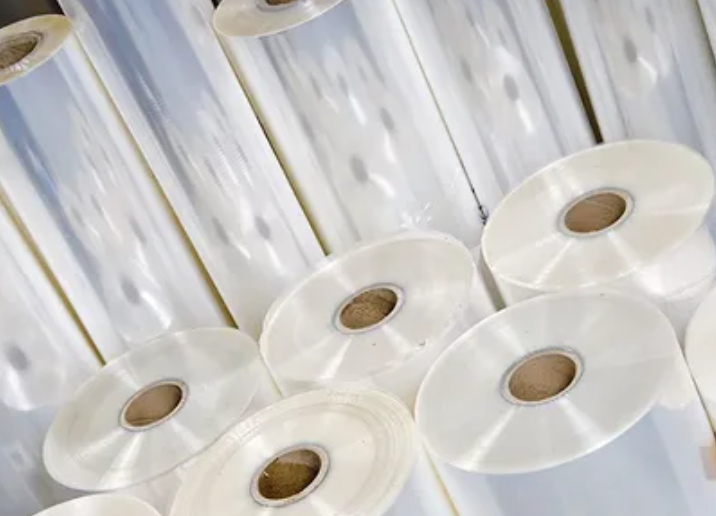
Flexible packaging production delivers significantly lower packaging weight per unit compared to rigid alternatives. Reduced weight lowers transport costs and reduces material consumption per product packaged, supporting both cost efficiency and sustainability goals.
Plastic film packaging adapts easily to irregular product shapes, removing the need for multiple box sizes or custom inserts. Film can conform to product contours during heat sealing, creating a tight, tamper-evident seal with minimal void space inside the pack.
Shrink film manufacturer capabilities allow surface-conforming packaging for grouped products, irregular shapes, and display-ready retail packs. Controlled shrink ratios ensure uniform surface tension without distorting product labels or graphics.
BARRIER PERFORMANCE
Barrier film packaging structures block oxygen and moisture transmission, extending shelf life for food and pharmaceutical products. EVOH and metallised layers provide high-barrier performance in flexible formats.
LIGHT WEIGHT
Flexible film materials reduce packaging weight by up to 90 percent compared to rigid containers. Lower weight directly reduces shipping costs per unit and shrinks carbon footprint across distribution networks.
LINE COMPATIBILITY
Film rolls produced to precise width and gauge tolerances run consistently on HFFS, VFFS, and overwrapping equipment. Accurate slitting reduces jam frequency and maintains line throughput.
VOLUME FLEXIBILITY
Flexible packaging production can be scaled from trial runs to full-volume supply without tooling changes. This supports new product launches and seasonal demand spikes without minimum order constraints.
SUPPLY RELIABILITY
Scheduled production cycles keep film stock available according to client consumption rates. Consistent flexible packaging supplier delivery prevents line stoppages caused by material shortages.
RECYCLABLE OPTIONS
Mono-material polyethylene film production supports recycling stream compatibility. Reducing mixed-polymer structures enables flexible packaging to meet circular economy procurement requirements.